The Little Blue Card You Shouldn’t Travel Without
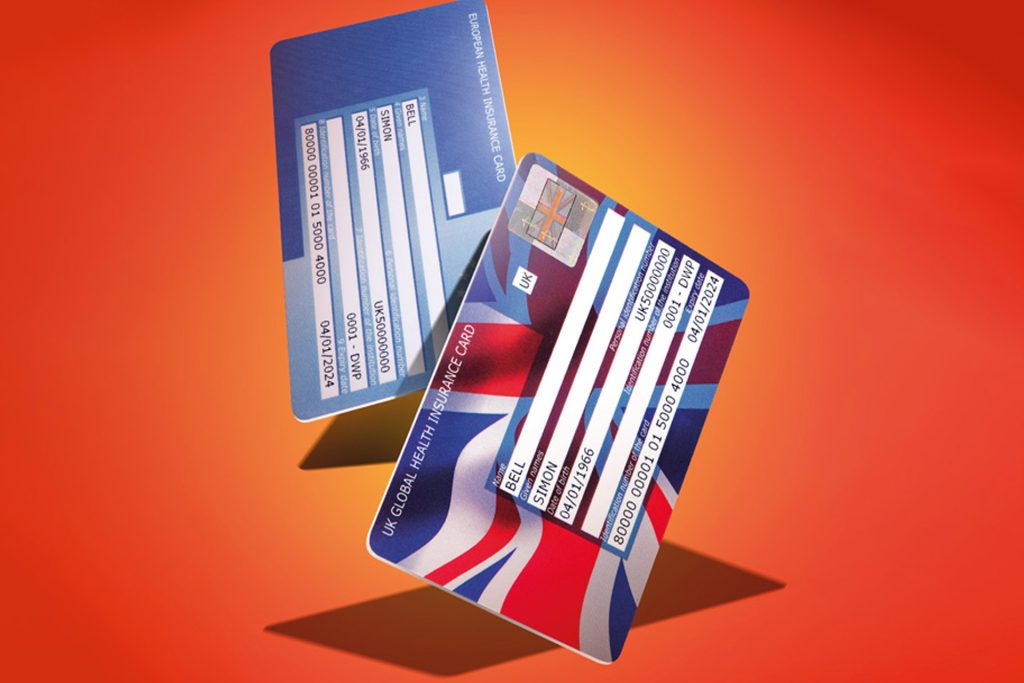
You may remember the old European Health Insurance Card, usually called an EHIC. Since the UK left the EU, most UK residents now need its replacement: the UK Global Health Insurance Card, or GHIC.
Despite its rather grand name, the GHIC is mainly designed to help you access medically necessary state healthcare while visiting participating European countries and a small number of other destinations.
It is completely free, lasts for up to five years and is one of those simple pieces of travel preparation that can potentially save you a great deal of money and stress.
What does a GHIC actually do?
A GHIC allows you to receive medically necessary state-provided healthcare during your trip on the same basis as someone who lives in the country you are visiting.
Depending on that country, the treatment could be free, or you may need to pay the same contribution that a local resident would pay.
“Medically necessary” does not only mean life-threatening emergencies. It means treatment that cannot reasonably wait until you return to the UK. It can include:
- Emergency treatment and visits to A&E
- Necessary treatment for an illness or injury
- Care for an existing or long-term medical condition
- Routine maternity care, provided you have not travelled specifically to give birth
The healthcare provider will decide whether the treatment is medically necessary during your stay.
You can check exactly where the UK GHIC is accepted and what the rules are for each country.
What might it cover in a real-life emergency?
Let’s imagine you develop severe sunstroke while on holiday in Spain. You become dehydrated and need to go to hospital for an examination and intravenous fluids.
If you attend a state hospital, that treatment would normally be considered medically necessary. Your GHIC would allow you to receive it on the same basis as a Spanish resident.
Or imagine you fall, break your arm and need to visit a state hospital. The necessary treatment could include:
- An examination
- X-rays
- Pain relief
- Setting the broken bone
- A plaster cast or other immediate treatment
- Any follow-up care that cannot wait until you return home
Once again, your GHIC would normally allow you to receive this treatment on the same basis as a resident of that country.
That does not necessarily mean everything will be completely free. If local residents are expected to contribute towards prescriptions, treatment or medical equipment, you may have to pay the same contribution.
The important phrase in both examples is state healthcare.
If your hotel sent you to a private tourist clinic, the GHIC would not cover the bill—even if the treatment was medically necessary. You would need to rely on your travel insurance, assuming the treatment was covered by your policy.
Why do I need travel insurance as well?
A GHIC and travel insurance do different jobs. It isn’t a case of choosing one or the other—you should travel with both.
Let’s return to the broken-arm example.
Your GHIC may help you receive the immediate medical treatment you need at a state hospital. However, suppose the injury is more serious and you need to remain abroad for longer than planned. You may need:
- A new flight home
- Extra accommodation
- Someone to stay with you
- Private medical treatment
- Special assistance for the journey home
- Medical repatriation by air ambulance
The GHIC would not cover those additional costs. Depending on the terms of your policy, this is where your travel insurance should step in.
The same applies to severe sunstroke. The GHIC may provide access to necessary state hospital treatment and fluids, but it would not cover a missed flight, an extended hotel stay or the cost of medically transporting you back to the UK.
A simple way to think about it is:
The GHIC helps you access necessary state healthcare. Travel insurance protects you against the wider financial consequences of becoming ill or injured abroad.
Travel insurance may also cover things that have nothing to do with medical treatment, including:
- Cancelling or cutting your holiday short
- Lost or stolen luggage
- Delayed travel
- Private medical treatment
- Mountain or ski rescue
- Medical repatriation to the UK
Your GHIC will not pay to fly you home if you become seriously ill or injured. Medical repatriation can cost many thousands of pounds, which is one of the reasons proper travel insurance remains essential.
It is also worth remembering that many holiday resorts have private clinics aimed at tourists. Your GHIC will generally only cover qualifying treatment within the state healthcare system, so check whether a clinic is public or private before accepting treatment where circumstances allow.
In an emergency, getting the treatment you need should obviously be the priority. Contact your travel insurer as soon as you reasonably can so it can advise you about approved hospitals, treatment and any costs it may cover.
Does everyone in the family need a card?
Yes. Every traveller needs their own card, including babies and children.
One adult can include eligible family members in their application, but a separate card will be issued for each person. Children cannot simply travel under their parent’s card.
Remember to check the expiry date on every family member’s card while you are planning your trip. They may not all expire at the same time.
What happened to the EHIC?
If you already have a valid UK-issued EHIC, you can continue using it until the expiry date printed on the card. When it expires, most UK residents will apply for a GHIC instead.
Some people who are protected by the Brexit Withdrawal Agreement may still qualify for a new UK EHIC. The official application service will help establish which card you are entitled to.
You can renew a GHIC or EHIC up to nine months before it expires.
How to apply for a GHIC
Step 1: Use the official NHS application service
Apply through the official NHS Overseas Healthcare Services application page.
The application is completely free.
Be careful when searching online. Unofficial companies may appear in search results and charge you to submit an application that you can complete yourself for nothing.
Step 2: Gather the information you need
You will normally need:
- Your full name
- Your UK address
- Your date of birth
- Your National Insurance number
- A Health and Care number if you live in Northern Ireland
- The details of any eligible family members you are including
Enter the main applicant’s details first. You will then be given the opportunity to add eligible family members.
Step 3: Complete the eligibility questions
The service will ask questions about your residency and circumstances to determine whether you should receive a GHIC or, in certain circumstances, a UK EHIC.
You may be asked to provide additional documents proving that you live in the UK or have the right to reside here. If this happens, the NHS Business Services Authority will email you with instructions.
Step 4: Check your email
The NHS says you should normally receive an email within 24 hours telling you whether the application has been approved or whether further information is required.
Check your junk or spam folder if you cannot see it.
Step 5: Allow time for the cards to arrive
Once approved, your card should arrive by post within 15 working days. Apply well before you travel rather than adding it to the last-minute holiday panic list.
What if my card does not arrive in time?
If you need medically necessary treatment while abroad and your card has not arrived—or it has been lost or forgotten—you may be able to obtain a Provisional Replacement Certificate, usually shortened to PRC.
A PRC provides the same level of healthcare cover as the card for the treatment concerned.
You can apply for a Provisional Replacement Certificate through the official NHS service.
A PRC is not something you usually apply for simply because you are about to travel without your physical card. It is intended for someone who is receiving, or has already received, medically necessary treatment abroad.
The simple version
Before travelling:
- Check every traveller has their own valid GHIC or EHIC
- Apply only through the official NHS service—it should never cost you anything
- Take the physical card with you
- Check how state healthcare works in your destination
- Buy suitable travel insurance as well
The GHIC is free, lasts for up to five years and takes only a small amount of effort to arrange.
It does not replace travel insurance. Instead, the two work alongside each other: the GHIC helps you access state healthcare, while your travel insurance provides protection against the other medical, practical and financial problems that can follow.
You can read the full official guidance and begin an application through the NHS healthcare-abroad service.
Would you like some help applying?
We understand that online forms are not always as straightforward as they are supposed to be.
If you would like some support, we are very happy to sit down with you and help you work through the GHIC application. We cannot complete or submit the application on your behalf, but we can guide you through the official website, explain what information is needed and help you follow each step.
Please contact us if you would like to arrange some help.